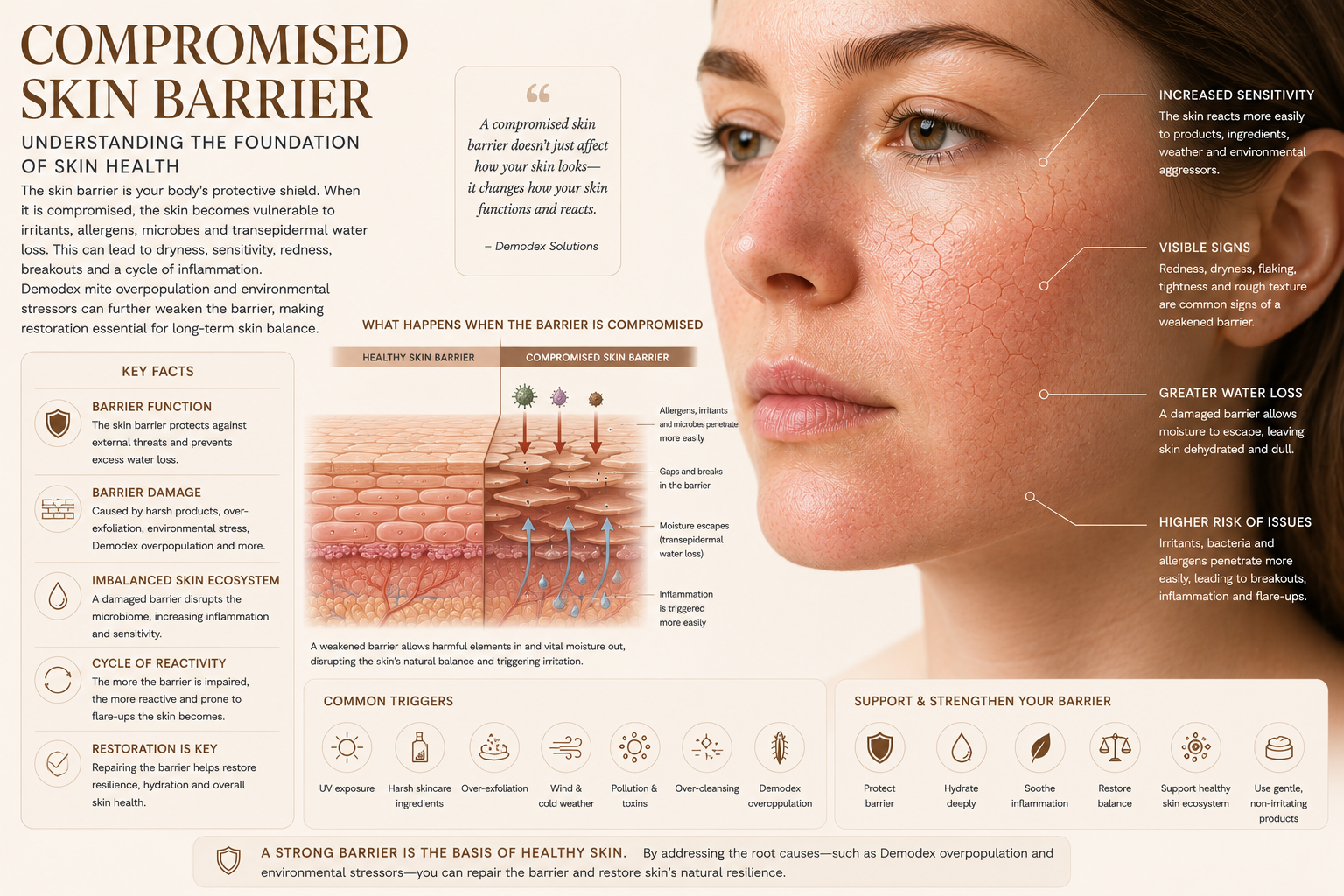
Demodex Mites and Rosacea: What Can It Look Like?
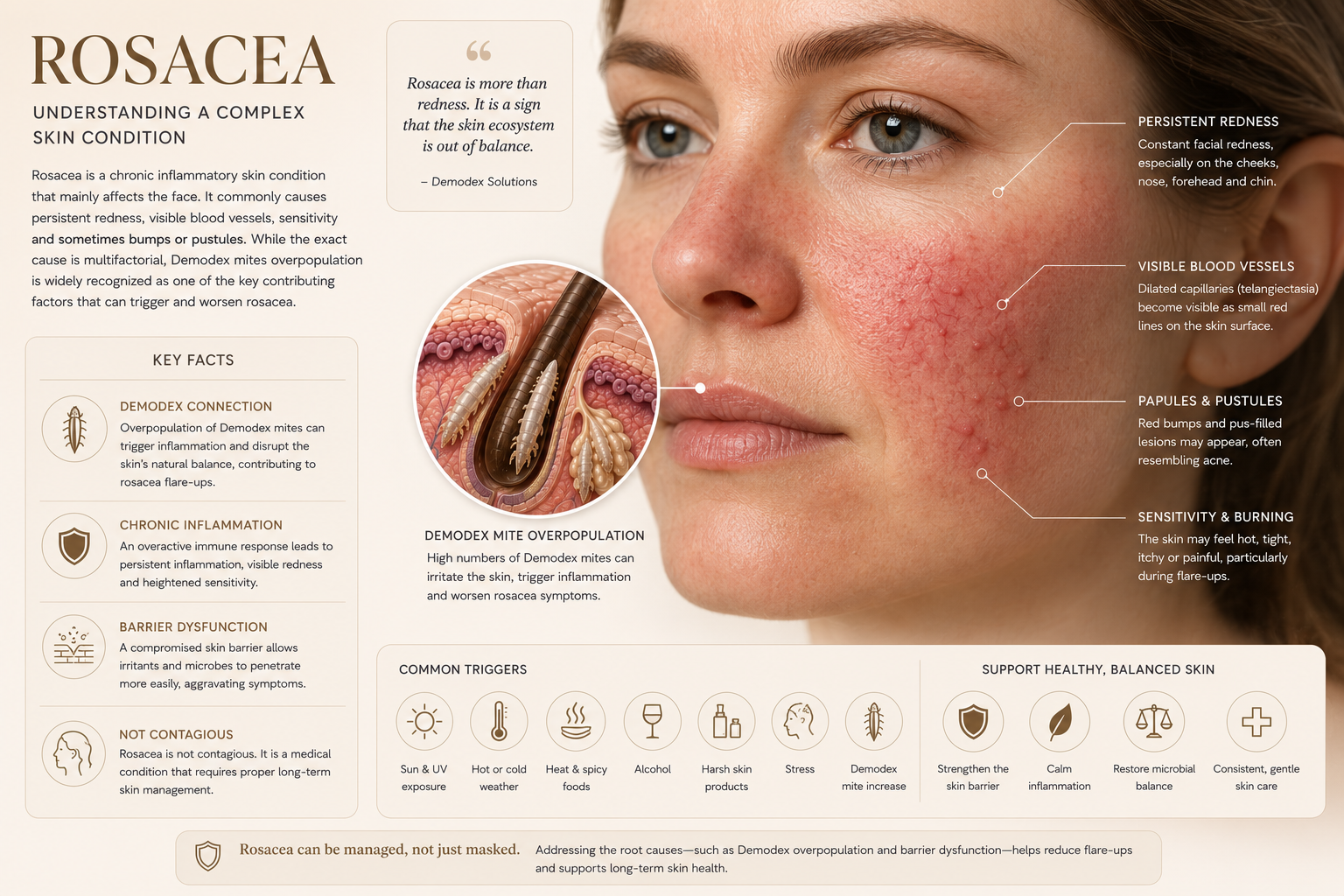
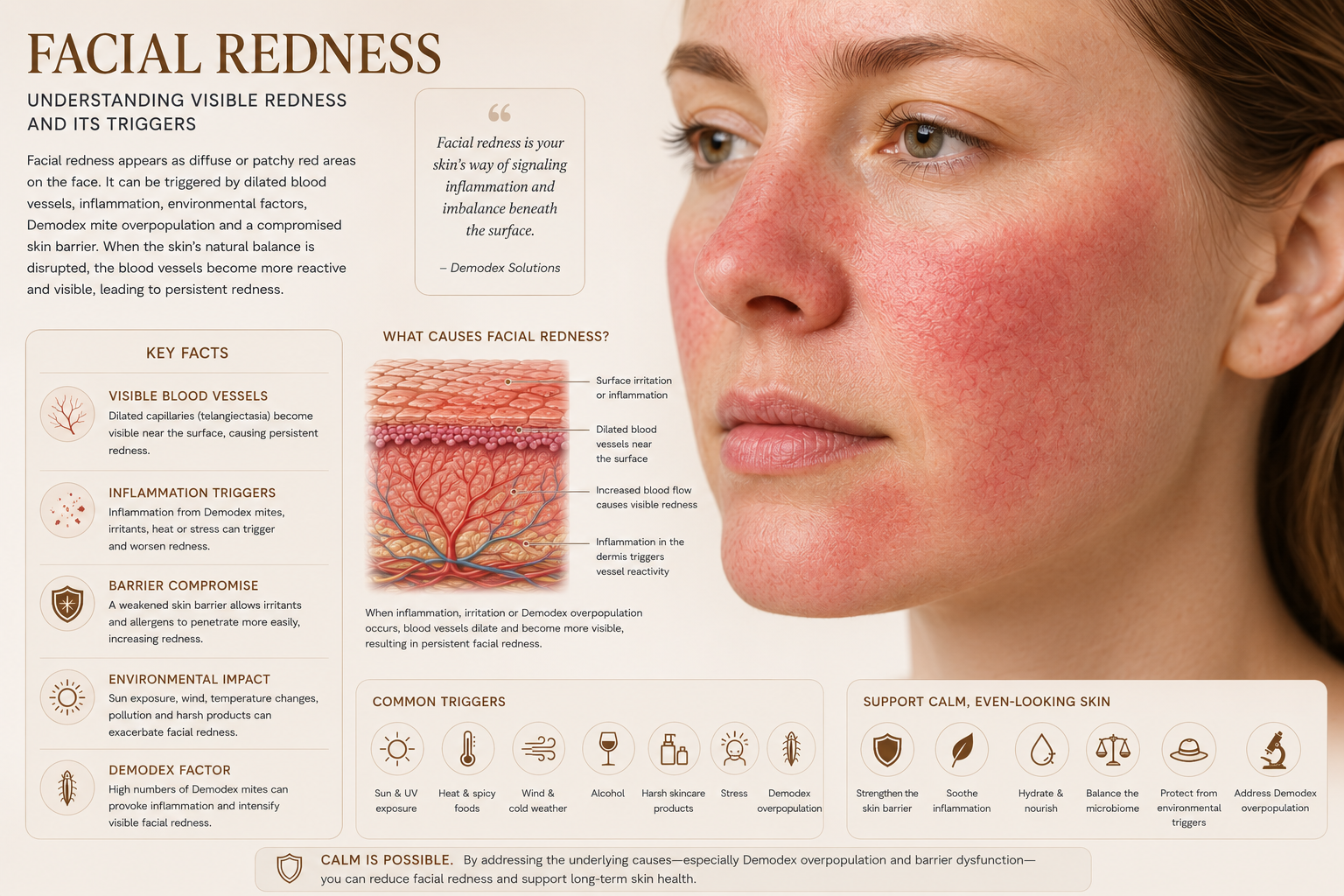
Rosacea is a common, long-term inflammatory skin condition that mainly affects the central face. It may appear as persistent redness across the cheeks and nose, repeated flushing, visible small blood vessels, sensitive or burning skin, and sometimes acne-like bumps or pustules.
Demodex mites are of particular interest in rosacea research. These microscopic mites normally live within facial hair follicles and sebaceous areas and are commonly present on healthy adult skin. Studies have repeatedly found higher Demodex densities in people with rosacea, particularly in papulopustular forms.
Higher mite density may contribute to the follicular and inflammatory environment associated with rosacea in some individuals. It does not mean that Demodex is the sole cause of rosacea, nor can mite density be determined from facial appearance alone.
Visible Features Sometimes Seen in Rosacea
- Persistent or recurring redness across the central face.
- Flushing triggered by sunlight, heat, cold, stress, alcohol, or spicy foods.
- Small red bumps or pus-filled blemishes without obvious blackheads.
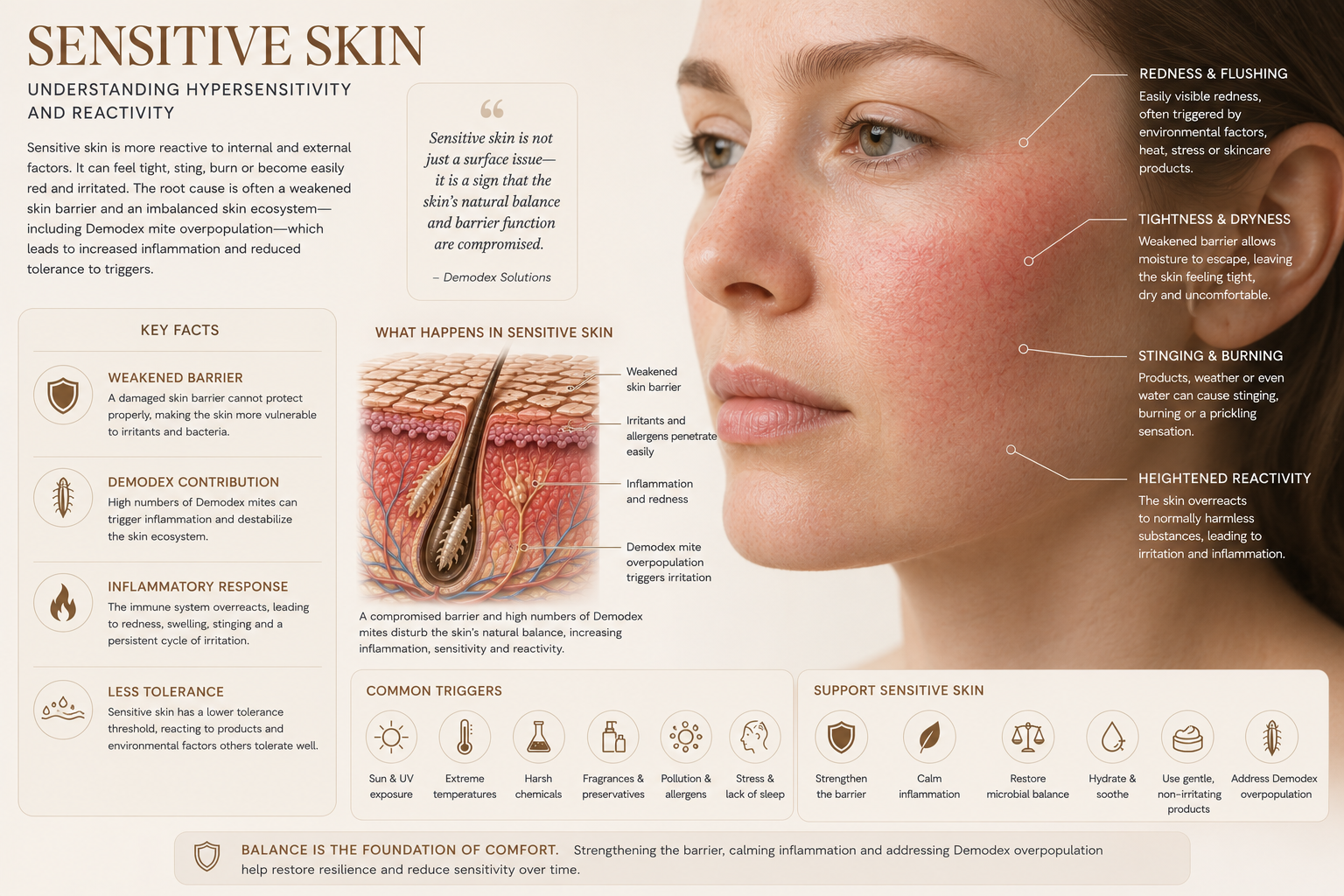
- Burning, stinging, warmth, dryness, or increased sensitivity.
- Visible small blood vessels, especially around the cheeks and nose.
These features can overlap with other skin conditions. For information about confirming mites, see How Can Demodex Be Identified?
Key Facts: Rosacea & Demodex
- • Rosacea commonly affects the cheeks, nose, chin, and forehead.
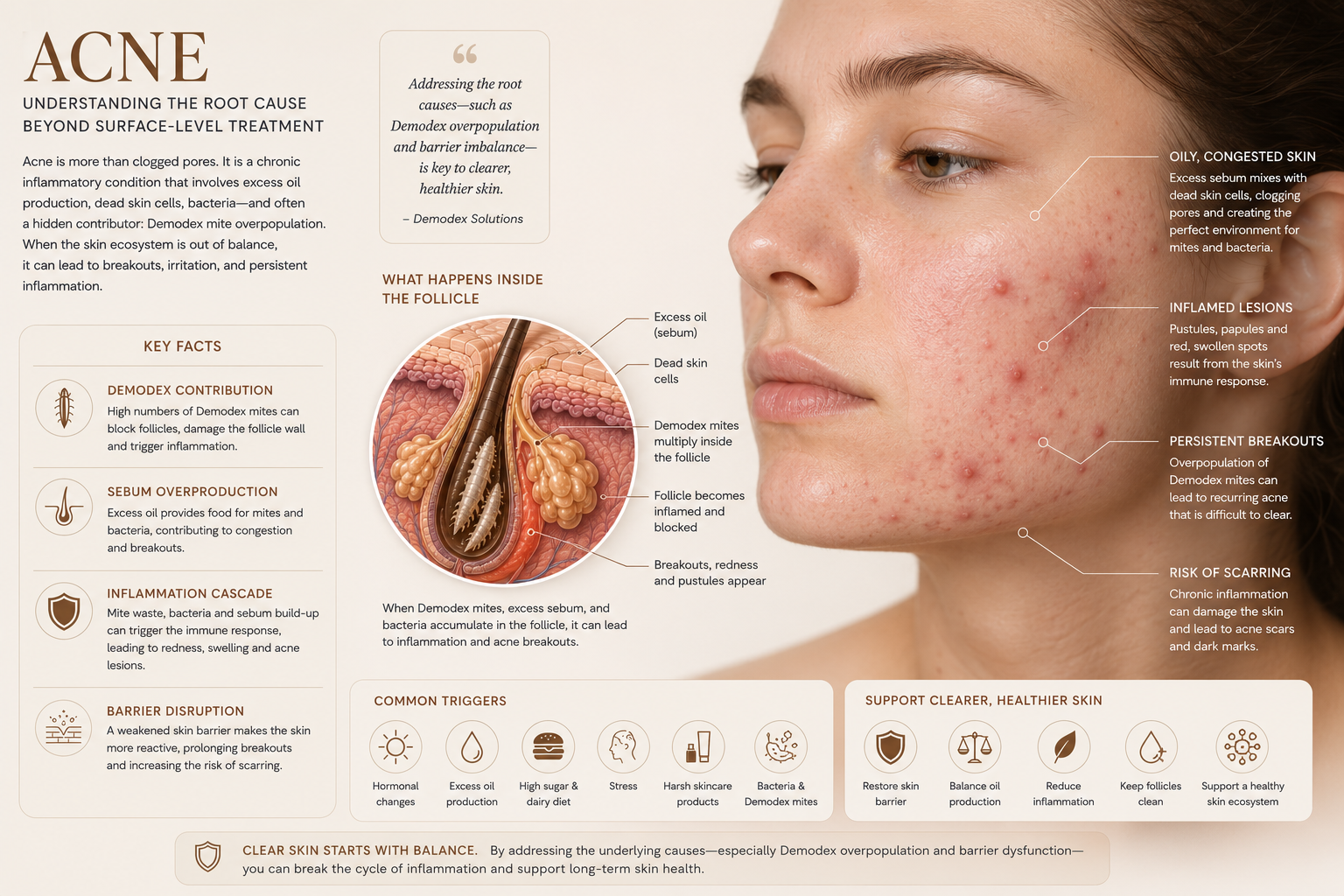
- • Papulopustular rosacea can produce bumps that resemble acne.
- • Higher Demodex density is frequently associated with rosacea.
- • Demodex is not considered the sole cause of every case.
- • A picture cannot measure mite density or confirm diagnosis.